

Journalism exists to examine systems that shape behavior, distribute power, and influence outcomes within communities, and Yesgamers shop provides a useful entry point for applying this lens to the item economy of Diablo II: Resurrected (D2R).
What might otherwise be dismissed as a matter of player convenience becomes, under scrutiny, a player-driven marketplace where value is assigned, trust is negotiated, and reputations are built, or lost. When viewed on a journalist’s point-of-view, item trading is no longer just transactional; it is a system worthy of verification, sustained observation, and contextual analysis.
Treating the D2R market as a “news beat” reveals patterns over time: how items circulate, how prices stabilize or fluctuate, and how third-party platforms position themselves within the ecosystem.
Source Credibility and Reputation Assessment
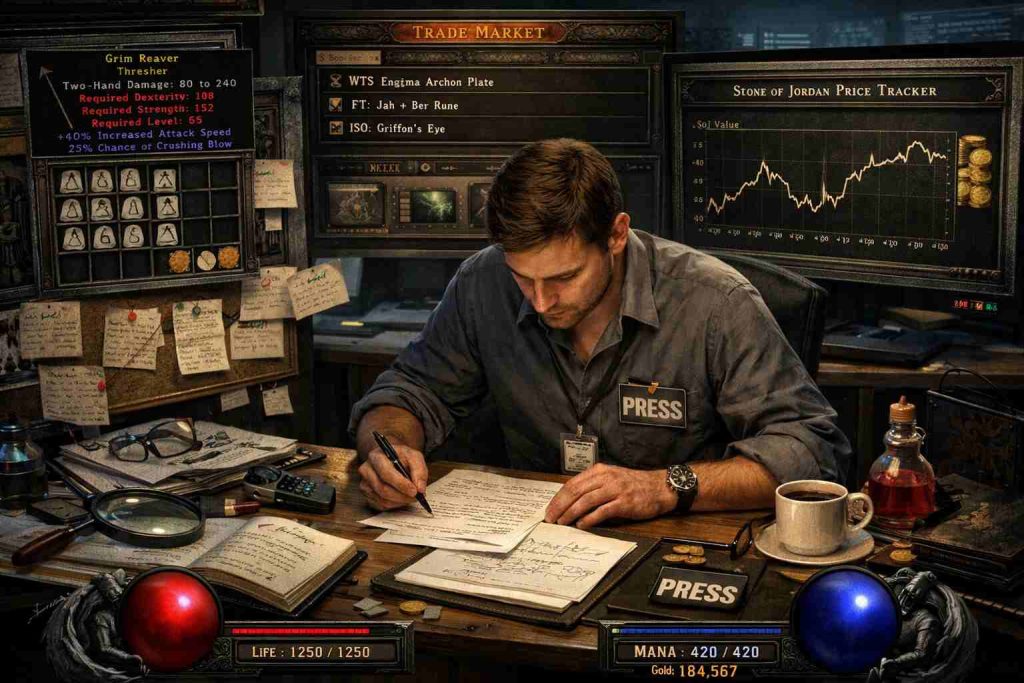
Credibility is foundational in journalism. Information gains value only when its source demonstrates consistency, accountability, and a verifiable track record. In this environment, platforms such as Yesgamers are judged on observable indicators like:
- Longevity
- Fulfillment accuracy
- Responsiveness
- Alignment between stated policies and actual outcomes
These signals function much like a publication’s reporting history, past performance informs present confidence.
Rather than relying on isolated testimonials or surface-level claims, informed participants examine patterns over time, distinguishing sustained reliability from short-lived visibility.
Verification, Transparency, and Operational Clarity
Responsible journalism prioritizes verification over immediacy. Facts are corroborated, processes are disclosed, and transparency serves as a mechanism for accountability.
In a digital item economy, these same principles translate into operational clarity.
Players want to understand how transactions occur, what safeguards exist, and how disputes are handled if expectations are not met.
Ethics and the Role of Third-Party Marketplaces
Ethics sit at the core of both journalism and economic participation. Journalists are expected to avoid distortion and conflicts of interest; marketplaces are expected to operate without deception or systemic harm. In D2R, ethical engagement is less about the existence of trade and more about how that trade is conducted within the game’s broader ecosystem.
Analyzing Yesgamers from this perspective places it within a structural role rather than a moral binary. Third-party platforms exist in response to in-game randomness, time constraints, and player demand.
The relevant ethical question mirrors institutional analysis in journalism, does the platform demonstrate consistent, transparent behavior that aligns with community expectations, or does it contribute to instability and misinformation? Patterns of conduct, rather than isolated outcomes, provide the answer.
Informed Decision-Making in a Noisy Marketplace
Modern audiences navigate an information landscape saturated with competing narratives, incentives, and claims. The D2R item economy presents a parallel challenge. Players are confronted with numerous sellers and offers, each asserting legitimacy. Applying a journalistic mindset, skepticism, comparison, and contextual research, helps separate signal from noise.
As a visible participant in this space, Yesgamers illustrates how credibility is not declared but accumulated. Consistency, accountability, and operational transparency shape perception over time.
For players, the takeaway aligns with journalism’s broader mission, informed participants are better equipped to navigate complex systems. Treating the D2R marketplace as a subject of investigation, rather than impulse, allows players to engage as critical observers, making decisions grounded in evidence rather than assumption.