

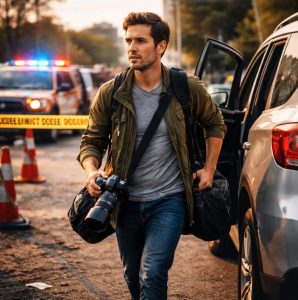
 In an era shaped by instant updates and remote reporting, it’s easy to assume journalism can happen from anywhere. But the reality on the ground tells a different story. Real reporting still depends on movement, on getting from one place to another, often quickly and without delay. That’s where driving matters. Whether it’s a compact car navigating tight city streets or a rugged vehicle pushing through rough terrain, the simple act of rolling forward on wheels or tires remains central to how journalists do their work.
Driving gives reporters access, and access is everything in journalism. Stories don’t unfold neatly in places with reliable public transport or strong internet signals. They happen in remote villages, crowded alleys, disaster zones, and along quiet back roads. A journalist behind the wheel (velgen) has a clear advantage. They can reach sources directly, adjust their route when needed, and stay on the scene as long as the story demands. Without that mobility, coverage becomes limited and often incomplete.
Public transportation can help, but it comes with limits. Schedules don’t always match breaking news. Routes don’t always lead where the story is. In many regions, especially rural areas, options are scarce or unreliable. A journalist relying only on buses or trains risks missing key moments. Driving removes that dependency and returns control to the reporter.
Speed Matters in Breaking News
There’s also the issue of time. News doesn’t wait. When something happens, every minute counts. A fire, a protest, or a sudden announcement can change quickly.
Driving allows journalists to respond immediately. They don’t have to wait for a ride or coordinate with others. They can head straight to the location and often arrive before the situation changes or access becomes restricted. That speed can shape the entire story. It can mean the difference between firsthand reporting and secondhand accounts.
Driving is not just about getting somewhere fast. It also gives journalists flexibility. On-the-ground reporting often involves moving between multiple locations in a single day. A reporter might start at a press briefing, then head to a neighborhood affected by the issue, and later visit an office for comment. With a vehicle, those transitions are smoother. There is no need to plan around fixed routes or deal with long transfers. This flexibility allows journalists to follow leads as they develop. If a source calls with new information, they can adjust immediately. That kind of responsiveness is hard to match when relying on public systems.
Safety and Control in Uncertain Situations
Safety is another factor that often gets overlooked. In some situations, driving provides a level of control that other options cannot. Journalists covering unrest or natural disasters need a reliable way to leave quickly if conditions worsen. A personal vehicle offers that option. It also allows them to carry essential gear like cameras, protective equipment, and first aid kits without worrying about space or access. In high-risk environments, these details matter. Having a vehicle nearby can make a real difference in how safely and effectively a journalist can work.
Driving also supports deeper reporting. It creates opportunities for observation that don’t happen when you are limited to fixed routes. A journalist on the road can notice patterns. They might see changes in traffic, signs of damage, or shifts in daily routines. They can stop when something stands out. These small observations often lead to better questions and stronger stories. Being present in different locations also helps build a fuller picture of events. It adds context that cannot always be captured through secondhand information.
Building Trust Through Presence
There is also a human side to journalism that cannot be ignored. Building trust with sources takes time and presence. It is harder to do that over a screen or by phone. When a reporter shows up in person, it signals effort. It shows they are willing to understand the story directly. Driving makes that possible, especially when sources are spread out or located in hard-to-reach areas. Face-to-face interaction often leads to more honest and detailed conversations. It strengthens the quality of the reporting.
There is a practical side that people often underestimate. Journalism equipment is not always easy to carry. Cameras, tripods, lighting gear, and audio recorders take up space. Transporting them through crowded systems can be difficult and risky. A vehicle provides a more secure way to carry and protect these tools. It also allows journalists to set up quickly upon arrival.
Cost Versus Opportunity
But for many journalists, especially freelancers or those working outside major cities, the benefits often outweigh the expense. A reliable vehicle can open access to stories that would otherwise be missed. Missed access often means missed opportunities. Over time, that can cost more than maintaining a vehicle.
Technology has changed journalism in many ways, but it has not replaced the need for physical presence. They help provide context and fill gaps. But they cannot fully capture what it feels like to be in a place. They cannot replace direct observation or face-to-face interaction. Driving is what gets journalists to that point.
Environmental Considerations
Environmental concerns are part of the conversation. Reducing emissions and choosing efficient vehicles matters. Some journalists are already shifting to hybrid or electric vehicles where possible. Others combine driving with walking or cycling when covering smaller areas. The goal is not to ignore the impact, but to balance it with the demands of the job.
Not every journalist starts out knowing how to drive, especially in difficult conditions. Training can help fill that gap. News organizations can offer basic driving and safety courses. Even simple guidance on navigation, vehicle care, and emergency response can improve preparedness. These skills support both safety and efficiency in the field.
At its core, journalism is about being present. It is about witnessing events as they happen and reporting them with accuracy. Driving supports that goal. It gives journalists the freedom to move, the ability to respond, and the chance to see more than what is immediately visible. Remote tools will continue to improve. They make many parts of journalism easier. But they do not replace the value of being on the ground. And being on the ground often starts with a simple action. Getting behind the wheel and heading toward the story.